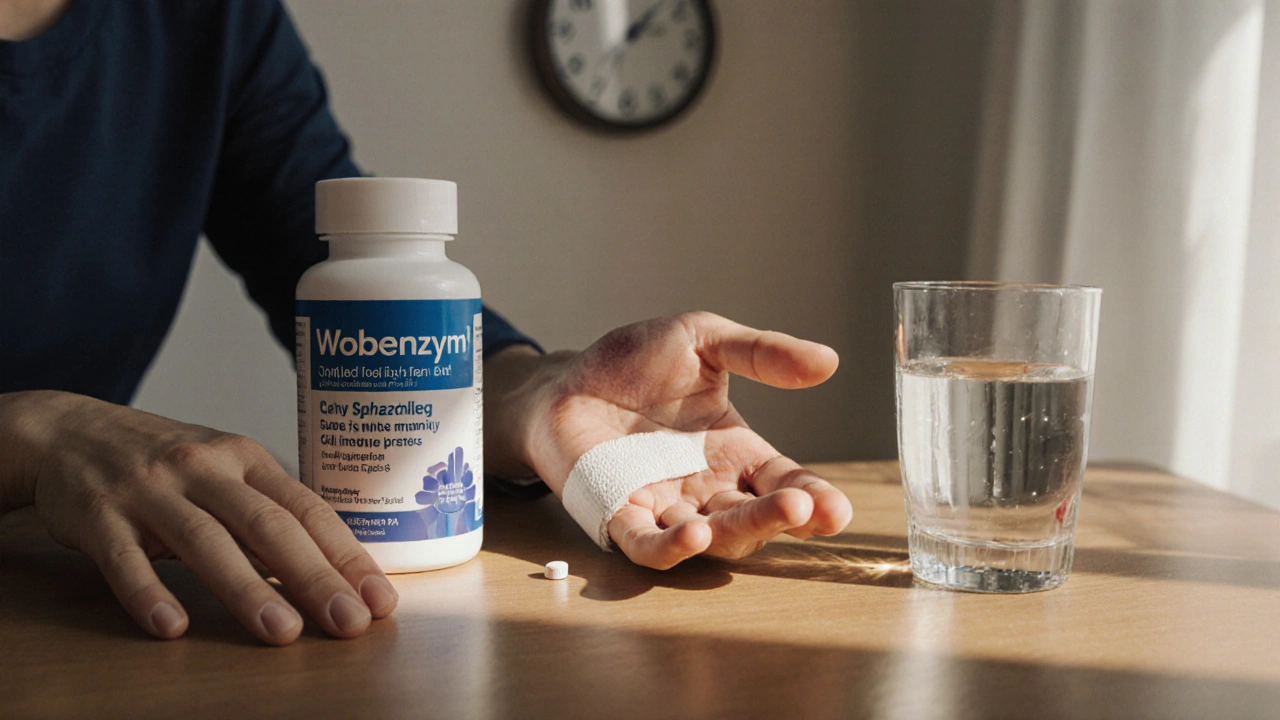
Zjistěte, jak správně užívat Wobenzym po úrazu ruky - od správné dávky a času užívání až po kombinaci s fyzioterapií a výživou pro rychlejší hojení.
Enzymy po operaci: Co pomáhají při hojení a jak je správně použít
When you're recovering from surgery, your body doesn't just need rest—it needs the right tools to heal. enzymy po operaci, biologicky aktivní látky, které rozkládají nečistoty, záněty a hematomy v tkaních. Also known as proteolytické enzymy, they're not magic pills, but they're one of the few evidence-backed helpers that actually reduce swelling and speed up recovery after procedures like liposuction, breast surgery, or hand operations. Many patients think rest alone will fix everything, but if your body can't clear out the cellular debris, healing slows down—and that's where enzymes step in.
They work by breaking down fibrin, the sticky protein that builds up after trauma and traps fluid, causing those stubborn otoky po operaci, nežádoucí nafouknutí tkání, které způsobují bolest a omezení pohybu. Think of it like cleaning up spilled paint: without enzymes, the dried residue stays stuck; with them, it gets washed away naturally. This isn't just theory—studies show patients who took specific enzyme blends reported less pain and faster mobility after abdominoplasty or facial surgery. They also help with lymfatický odtok, přirozený systém, který odvádí odpadní látky z tkaní, ale často zůstává zapnutý jen částečně po chirurgickém zákroku. When lymph flow is sluggish, fluid pools and swelling lingers. Enzymes act like a gentle nudge to get it moving again.
Not all enzymes are created equal. Bromelain from pineapple and papain from papaya are the most studied, but they're often combined with trypsin and chymotrypsin in medical-grade supplements. These aren't the same as over-the-counter multivitamins—you need the right dosage and timing. Most doctors recommend starting within 24–48 hours after surgery and continuing for 7–14 days, depending on the procedure. Don't wait until your swelling peaks to try them. And no, eating pineapple won't cut it. You need concentrated, enteric-coated tablets that survive stomach acid and reach the bloodstream.
They're not a replacement for compression garments, elevation, or gentle movement—they're the missing piece that makes those methods work better. If you've had liposuction and still feel tight and puffy after two weeks, or if your hand still swells after a tendon repair, enzymes might be the answer your body's been waiting for. But they won't help if you're taking them with blood thinners or if you're allergic to pineapple or papaya. Always check with your surgeon first.
What you'll find in the posts below are real stories from patients who used enzymes after surgery—what worked, what didn't, and how they combined them with other recovery tools like rolling, cold therapy, and movement. No fluff. Just practical, tested advice from people who’ve been through it.