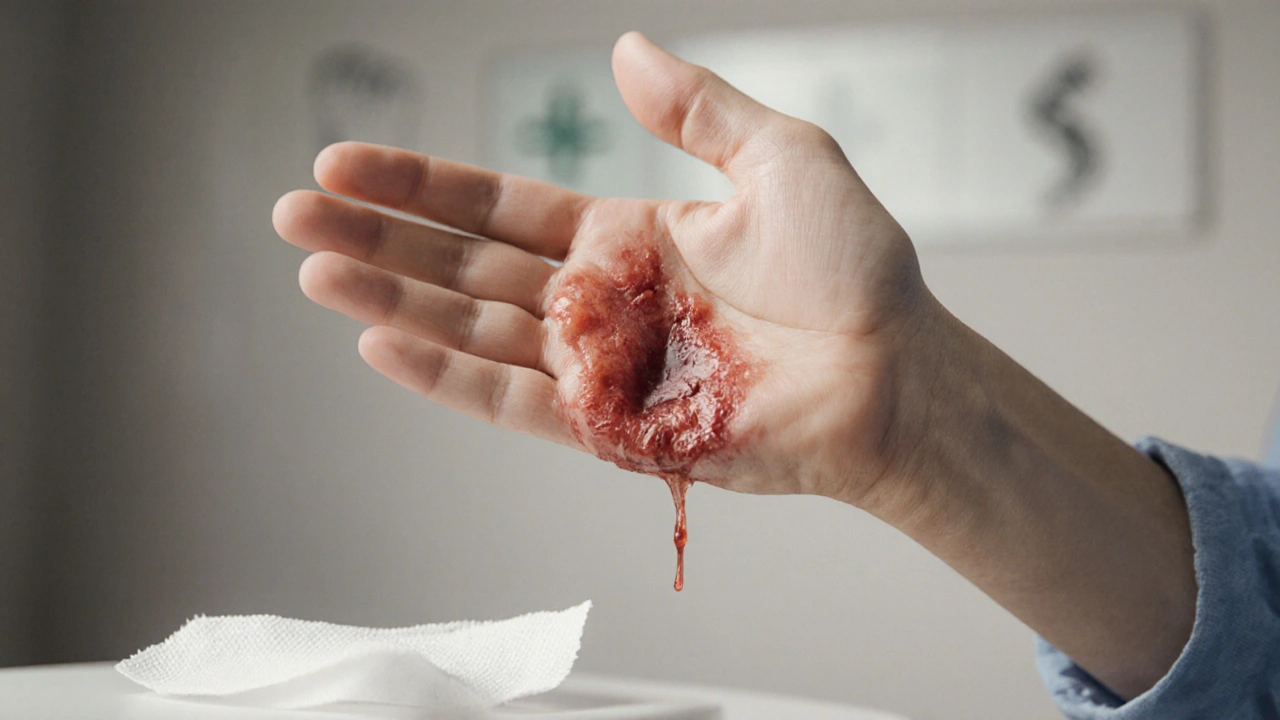
Nebojte se, když se rána na ruce nehojí. Zjistěte, proč to nastává, jak to léčit a kdy je třeba jít k lékaři. Praktické rady pro rychlé hojení a prevenci infekce.
Rána ruky: jak se hojí, co dělat a kdy se obrátit na lékaře
When you hurt your hand, it’s not just a cut or a bruise — it’s your ability to hold, grip, type, or even hug that’s at stake. A rána ruky, poškození kůže a podkladových tkání na ruce, které může vzniknout úrazem, operací nebo zraněním. Also known as zranění ruky, it can range from a simple scrape to a deep wound affecting tendons, nerves, or bones. Unlike a cut on your leg, a wound on your hand doesn’t just heal — it needs to recover function. Every day you avoid using your fingers, your joints stiffen, your muscles weaken, and recovery takes longer.
That’s why hojení rány, přirozený proces obnovy tkání po poškození, který vyžaduje správnou péči a čas isn’t just about keeping it clean. It’s about managing swelling, controlling pain, and slowly bringing movement back. If you’ve had surgery, your operace ruky, chirurgický zákrok na ruce, často na šlachách, kloubech nebo nervách, aby se obnovila funkce is only half the battle. The real work starts after you leave the hospital. Many people expect the wound to close in a week — but full recovery, especially after complex procedures, can take months. That’s normal. What’s not normal is if the swelling doesn’t go down, if the pain gets worse, or if your fingers won’t bend at all.
bolest po operaci ruky, běžný příznak po chirurgickém zákroku, který může být řízen léky, klidem a správnou polohou ruky is not something you should just endure. There are proven ways to reduce it — elevating your hand above your heart, using cold packs in the first 48 hours, and avoiding heavy lifting. And otoky po operaci ruky, nafouknutí tkání kolem rány, které je reakcí na poškození a může omezovat pohyb are not a sign of failure — they’re a sign your body is working. But if they don’t improve after a week, or if your skin turns red, hot, or starts oozing, you need to see a doctor. No guessing. No waiting it out.
You’ll find real answers here — not theory, not marketing fluff. We’ve collected guides from patients who’ve been through it: how to use Wobenzym correctly, what to do when your fingers feel numb, how long to wear compression, and when you can finally wash your hands normally again. Whether you had a simple wound or a complex reconstruction, you’re not alone. The road back to full function is long, but with the right steps, it’s doable. Below, you’ll find everything you need to heal properly — no guesswork, no confusion, just clear, practical advice.